

The Guilt of Moving On
July 1, 2026
Mid-Year Mastery: How to Beat the Summertime Slump
August 3, 2026
“I took a deep breath and listened to the old brag of my heart. I am, I am, I am.” – Sylvia Plath, The Bell
Jar
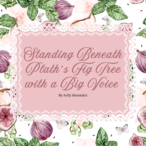
In her seminal biographical novel, The Bell Jar, Sylvia Plath gives us an immortal metaphor for the agony
of choice. Esther Greenwood, Plath’s protagonist, lounges at the base of a fig tree with a watering mouth
and decisionless longing because she cannot decide which fig to choose.
Esther describes, “I wanted each and every one of them, but choosing one meant losing all the rest, and,
as I sat there, unable to decide, the figs began to wrinkle and go black, and, one by one, they plumped to
the ground at my feet.”
Her hunger is deeply rooted and transcends a physical fig—it’s something we experience internally. The
power of choice, albeit fulfilling, can also leave us hungering.
The modern woman is a visionary, carefully cultivating her capabilities and flourishing financially, and yet
she may still feel this metaphor and fear the starvation of her own what if’s. We want it all—and yet, we
can’t always have that.
So like Esther Greenwood, we listen to that pervasive, indecisive little voice while our options whither
and fall and we watch with grumbling minds and tummies we fear may never feel full again.
This is where we must remember that the power of choice is a double-edged sword that can be used
both for good and evil. The same way you can get caught in indecision by inadvertently making the
choice to do so, you can also choose to invest, attempt, and progress.
The Genesis of Analysis Paralysis
We live in a culture that worships the value of keeping options open.
We are told that freedom involves keeping every door open, maintaining flexible calendars, and mapping
exit strategies for every room we’re in. Our fear of commitment leads us through a life unlived. When we
refuse to choose and instead think through every little thing with the kind of depth and precision society
champions, we enter an agonizing mental state known as analysis paralysis.
Analysis paralysis is not a mechanical failure of intellect; it is an emotional defense mechanism. It is the
ego’s frantic attempt to protect us from the grief of a closed door.
When we face a critical crossroad—whether to pivot our businesses, walk away from a misaligned
relationship, or step into a massive new leadership mantle—our analytical minds go into hyper-drive.
We convince ourselves that by overanalyzing every option, we’re giving ourselves much-needed due
diligence. But this fear of regret only leads us through a vicious cycle of decision fatigue in which we
reach a state of paralysis in which we become the fallen fig.
This is the exact point where our internal volume shifts, and we can find distinction between the Little
Voice and Big Voice.
The Little Voice is the historical narrator of our scarcity. It looks at Plath’s fig tree and operates from an
urgent, emergency mindset.
It whispers that time is running out, that resources are scarce, and that a single wrong choice will destroy
our entire trajectory. The Little Voice treats decisions as a zero-sum game of survival that demands
absolute certainty before it allows us to move. Because absolute certainty is an achievable myth of
perfectionism, the Little Voice keeps us frozen in place, watching our options wither.
The Big Voice, however, operates from an entirely different frequency. It is the voice of our somatic
safety, our intuition, and our sovereign authority. The Big Voice understands that the power of choice
does not lie in finding the “perfect” fig—the Big Voice understands that the power of choice lies in the
act of choosing itself—in trying and failing and facing the fears.
The Unchosen Path
Why is making a definitive choice so painful? Because we get locked in a head game. We become
consumed by the phantom versions of ourselves that we must leave behind.
Every choice has consequences, whether positive or negative. There are certain habits or versions of
yourself that you may need to shed in order to move forward.
Our lingering thoughts on the unchosen paths cause suffering because they become romanticized
perfection we project into our mind as fruitful what if’s. They’re the figs we let fall to the ground. We
assume that the alternative life would have been seamless, devoid of the friction, market dips, or
relationship hurdles we face in our actual reality.
This mental loop splits our presence. We end up living a fractured existence—physically executing one
path while emotionally longing after another. By refusing to fully inhabit our choice, we ensure that the
path we did take never truly bears fruit. We become ghostwriters of our own lives, writing footnotes
about paths we never had the courage to walk.
Forgoing Perfectionism
Breaking free from analysis paralysis requires discomfort. But growth, like healing, undulates. Sometimes
it’s a raging sea, and other times the waters are calm and clear.
The Big Voice does not look for an easy path; it looks for an aligned path. Alignment does not mean the
absence of challenges, but rather, it looks to the challenges you encounter and are proud to fight. When
you choose a path from your Big Voice, you draw a boundary line between what you can control and
what you cannot.
When you step out of the mental loop of resistance and fully commit to a direction, a magnificent
psychological shift occurs; the energy that was previously wasted on back-and-forth vacillation is
suddenly reclaimed.
Your nervous system de-escalates from fight-or-flight into a state of groundedness.
4 Practices to Shake the Tree and Reclaim Your Agency
If you find yourself sitting beneath the fig tree today, watching your options age while you stay frozen in
analysis, use these four tactical shifts to awaken your Big Voice and execute with power:
- Mourn the Fallen Figs Intentionally
Stop pretending that choosing doesn’t hurt. Acknowledge that letting go of an alternative version of your
life requires grief. Give yourself permission to say, “This was a beautiful potential life, and I honor it, but
it is not the life I am choosing.” By consciously mourning the unchosen paths, you stop them from
haunting your subconscious and dragging down your current execution. - Establish a “Certainty Deadline”
The ego will always ask for one more data point, one more conversation, or one more week of
contemplation. Draw a hard boundary on your calendar. Give yourself a specific date and time by which
the research phase ends and the execution phase begins. Treat this deadline with the same absolute
reverence you would show a high-stakes legal contract. - Practice Small, Somatic Choices Daily
Analysis paralysis is a habit born of a dysregulated nervous system that fears mistakes. To retrain your
brain, practice rapid, intuitive decision-making on low-stakes items. Order at a restaurant in less than
thirty seconds without looking back. Pick an outfit instantly. Choose a workout path without
over-thinking the optimization. Build the muscle of trusting your first internal signal. - Trust the Re-Grafting of Life
The ultimate limitation of Sylvia Plath’s metaphor is that she viewed the tree through a lens of static
finality—she believed that once a fig fell, the story was over. But you are not a passive observer sitting in
a tree; you are the gardener. Life is an ongoing process of pruning, grafting, and regeneration. A door closed today does not mean your capacity for abundance is dead. A sovereign woman can always plant a new seed.
The Sovereign Command: Pick the Fig
The dog days of hesitation are exhausting. They sap us of our inspiration, cloud our strategic vision, and
leave our teams and families feeling our fragmented presence. The quality of our leadership is deeply
compromised when we refuse to take a firm stance on our own timelines.
Slowing down your life does not mean avoiding decisions; it means having the deep patience to listen to
your Big Voice, pick your fruit, and digest it fully. It means reaching out your hand, selecting a single fig,
and biting into it with absolute, unapologetic commitment.
Let the other figs fall. Let the ground claim what was never meant to be yours in this season. Stop
hurrying through life trying to taste every path simultaneously, only to end up starving.
Reach out. Make your choice. Bring your full ambition, your complete presence, and your unstoppable
execution to the single path before you. Your Big Voice is waiting for you to step out of the head game of
what could have been, so you can finally inherit the magnificent reality of what is.