


How to Catch Emotional Projections
August 3, 2026
Value-Driven Leadership and the Art of Seeing People
September 9, 2026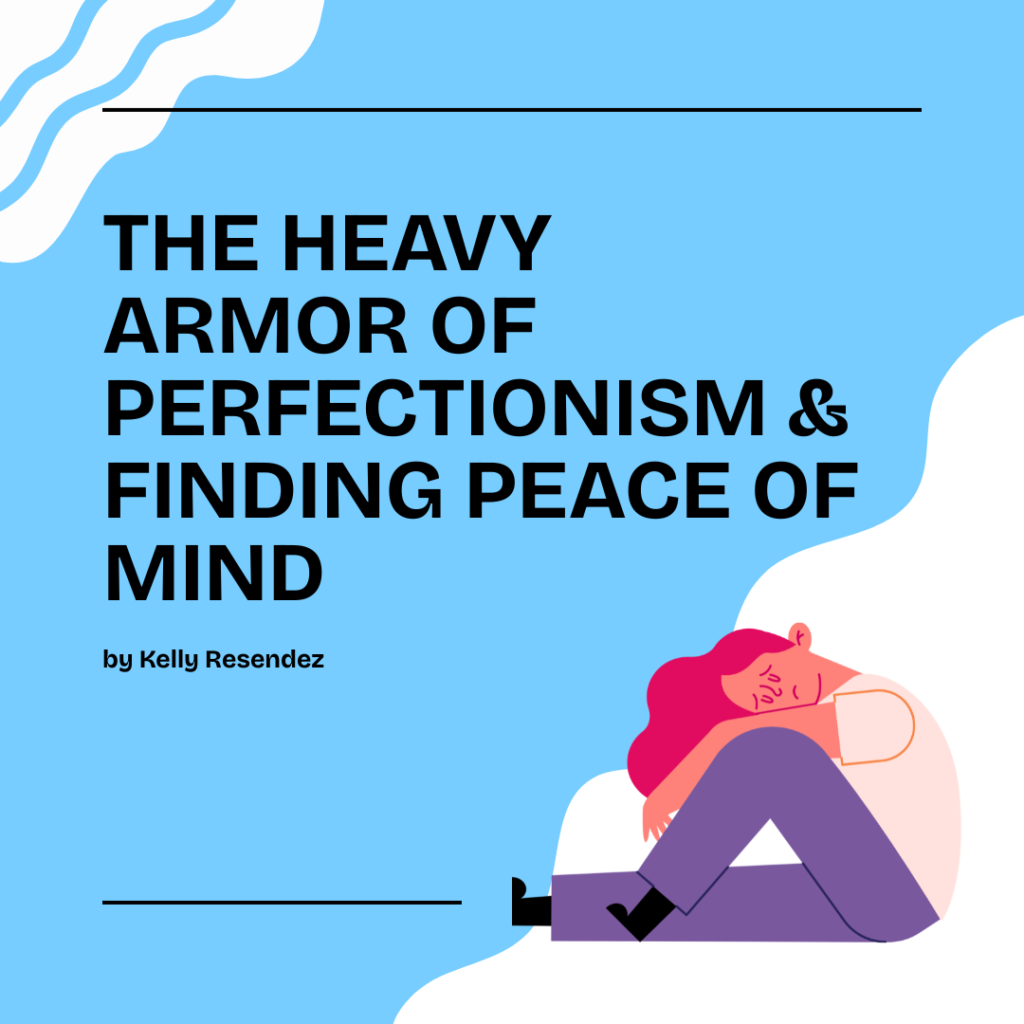
On paper, your life might appear full and perfectly curated. You hit deadlines, anticipate the needs of others, have your home running like a well-oiled machine, and deliver high-quality work that makes even perfectionism jealous.
To the outside world, you’re the reliable one—the person who has it all together.
So why, after a day of doing everything right, do you collapse onto the couch with the tension of leaving things unfinished, even if logically, you know it’s impossible to truly finish everything? Why does your mind immediately jump to the late email you convinced yourself to leave for tomorrow, the slightly tense interaction with a stranger in the market, or the vague feeling that you’re falling behind?
If you’re constantly performing, striving, and optimizing, yet peace remains out of reach, you aren’t suffering from a lack of achievement. You are wearing the heavy armor of perfectionism.
The Big Myth: Standards vs. Survival
We often frame perfectionism as a virtue wrapped in a complaint. In job interviews, it’s the default safe
answer: “My biggest weakness? I care too much about getting things right.”
We treat it as a commitment to high standards; an internal fire lighting our path toward excellence.
It isn’t.
Excellence is an internal standard focused on growth, connection, and craft. Perfectionism, by contrast, is
a defense mechanism. It’s armor we build from a young age to protect us from judgment, criticism,
rejection, or shame.
● Excellence asks: “What can I learn here, and how can I bring my best self to this effort?”
● Perfectionism asks: “What will they think of me if this isn’t flawless?”
When you operate from perfectionism, high performance isn’t fueled by passion—it’s driven by relief.
You don’t execute a project because you love the work, you execute it perfectly so nobody can find a
flaw in you. The goal isn’t success anymore. It’s safety.
The Hidden Costs: Decision Fatigue and Anxiety
When perfection becomes your baseline expectation, every decision big or small carries
disproportionate weight. Choosing a color palette for a slide deck, drafting an email to a client, or
deciding what to cook for dinner all turn into a high-stakes test of your worth, which leads directly to
decision fatigue.
The process usually begins with an urgent need for safety, which sets off unrealistically high standards.
To meet those standards, you slip into hypervigilance and overworking, which inevitably leads to
emotional exhaustion and resentment. As burnout sets in, your secret fear of incompetence resurfaces,
sending you right back to the start of the cycle.
When safety depends on flawlessness, any mistake—a typo in an email, a forgotten detail, or an
imperfect response to a loved one—is perceived not as a simple error, but as a direct threat to your
identity.
Practices to Unbuckle the Armor
Stripping away armor that has protected you for years requires patience. You don’t need to lower your
values, you simply need to separate your work product from your self-worth.
- Practice “Strategic Imperfection”
If your nervous system is wired to avoid errors, you need to teach it that minor imperfections won’t
cause your life to fall apart. Pick low-stakes areas to intentionally lower your standards.
● Send an internal email without reading it four times first.
● Leave dishes in the sink overnight.
● Submit a project draft that is 80% complete to gather early feedback.
Notice the physical discomfort that arises when you do this—sit with that feeling for two minutes
without fixing it. Watch what actually happens: the world keeps spinning, people move on, and your
safety remains intact. Urgency is a mechanism of perfectionism. Removing it is a reflection of recognition
of your humanity. - Shift from Validation to Contribution
Before jumping into a task, check your underlying motive. Ask yourself: “Am I doing this to be seen as
impressive and seek validation from others, or am I doing this to be useful and productive for myself?”
When your focus shifts from managing impressions to serving a purpose, the pressure drops instantly.
You stop monitoring yourself and start engaging with the work itself. - Reframe “Good Enough” as “Sustainably Excellent”
Perfectionists often worry that letting go of their strict control will lead to sloppy performance, but
running at full capacity continuously is a quick way to burn yourself out.
“Good enough” isn’t mediocrity—it is sustainably excellent. It means holding a high standard for what
truly matters while conserving energy on the rest, allowing you to sustain your effort over the long haul.
Uncovering Your Authentic Voice
When you lay down the armor of perfectionism, you might initially feel vulnerable, uncomfortable, or
awkwardly exposed. Without constant striving, you may wonder who you are or what drives you.
The answer to freeing yourself from the constraints of perfectionism lies beneath the armor. When you
stop expending energy attempting to prevent criticism, you free up mental bandwidth to create, lead,
and connect authentically. Real strength isn’t about remaining flawless—it’s about trusting yourself
enough to handle being human.