


The Magic of Intuition
May 12, 2026
Dopamine Seeking and Detoxing
June 15, 2026
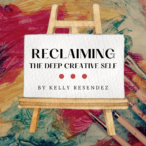
The modern world is currently engaged in a silent war for the most valuable resource on the planet: your attention. While we often discuss burnout as the primary obstacle to leadership, a more insidious
condition has emerged—one that the digital generation has aptly named brain rot.
For the woman striving to lead from her Big Voice, brain rot is more than just a social media trend.
It’s an invasive physiological and psychological state of fragmentation that causes mental fog, shortened
patience, and a total inability to engage with the deep, complex thinking often required for true impact. When your mind is conditioned by a 15-second dopamine loop, constantly updated news cycles that sensationalize and fixate, the little voice—the voice of ego, fear, and shallow distraction becomes the loudest thing in the room.
To rise, we must first reclaim our ability to focus
The Anatomy of the Loop: Why Your Brain Feels “Rotten”
To cure a condition, we must first understand its mechanics. Short-form video platforms and
infinite-scroll feeds are not just entertainment; they are engineered environments designed to exploit a
psychological phenomenon known as variable reward schedules.
This is the same mechanism that makes slot machines addictive. When you swipe, you don’t know if the
next “hit” will be a piece of professional inspiration, a funny cat, or a stressful news headline. This
uncertainty triggers a massive release of dopamine. Over time, your brain’s baseline for stimulation rises.
Suddenly, sitting down to write a strategy proposal, read a complex book, or engage in a 20-minute
meditation feels agonizingly boring.
The Little Voice loves this state. It thrives in the shallow end of the pool because deep work is where we
confront our shadows, our goals, and our true potential. If the Little Voice can keep you scrolling, it can
keep you from doing the work that actually matters.
The Cost of Fragmentation
When we succumb to brain rot, the costs are higher than just lost time. We lose our deep creative self.
Deep work—a term popularized by Cal Newport in his book Deep Work: Rules for Focused Success in a
Distracted World—is the ability to focus without distraction on a cognitively demanding task. It is the
only state in which the Big Voice can truly communicate.
When your attention is fragmented, your leadership becomes reactive rather than proactive.
Furthermore, the constant switching between micro-tasks creates an attention deficit. Even after you put
your phone down, a part of your brain is still processing the last video, scrolling session, virtual
interaction or notification. This residue clutters your mental workspace, making it nearly impossible to
reach the flow state where your best ideas live.
The Antidote: A Strategic Framework for Reclaimation
Reclaiming your focus isn’t about pure willpower (though, it is still helpful to have willpower, so don’t
discredit this skill entirely). Reclaiming your focus is about environment design and neurological
rehabilitation. You can’t “will” yourself to ignore an algorithm designed by thousands of engineers to
capture you.
You must outsmart it.
- The Dopamine Pivot
The common advice is a digital detox, but for many professionals, disappearing from the grid is not an option—especially if you’re an entrepreneur. Instead, you should reframe this and practice a dopamine pivot.
This means intentionally shifting from passive consumption to active creation the moment you feel the itch to scroll. It’s almost like re-conditioning your brain to crave creativity over consuming content.
● The 10-Minute Rule: When you feel the urge to check your phone, tell yourself you can do it in
10 minutes—but for those 10 minutes, you must engage in an analog creative act. Sketch a
layout, write three sentences in a journal, or physically organize a small space.
● Micro-Creation: Replace the dopamine hit of seeing someone else’s life with the satisfaction of
building your own—this could be a small moment meant purely for your own creative
enjoyment, like putting together a yummy snack with bedtime beverage, dimming the lights, and
enjoying the nice, soothing energy you’ve created for yourself. - Building a Sanctuary for Focus
Your physical environment is the most powerful prime for your brain. If you work in the same spot where you scroll, your brain will struggle to distinguish between the two.
● The “Deep Work” Zone: Designate a specific chair or a specific lighting setup that is strictly for
your Big Voice work. Whether it’s a cool walnut-toned desk or a quiet corner with a paper
lantern dimly glowing beside you in a funky lounge chair, let the physical cues tell your brain: We
are focused now.
● The Analog Morning: The first 60 minutes of your day are the most vulnerable. If you check your
phone first thing, you have surrendered your Big Voice to the world’s agenda. Commit to one
hour of analog time—movement, reading, or planning—before the digital world is allowed in. - Neurological Rehabilitation: Training the Muscle
Attention is a literal muscle. If it has atrophied, you must put it through a version of physical therapy.
● The “Greyscale” Intervention: Go into your phone settings and turn the display to greyscale.
Removing the vibrant, candy-colored UI strips the “reward” from the apps. The screen becomes
a tool rather than a toy. Imagine if grocery store packaging were this way—you’d likely gravitate
toward the colorful fruits and vegetables for healthier options!
● The Vinyl Method: Engage in long-form media. Listen to a full album—start to finish—without
checking your phone. Read a physical book for 30 minutes. These activities force your brain to
stay with one narrative arc, rebuilding the neural pathways required for long-form strategy,
connection and leadership.
The journey out of brain rot is uncomfortable.
There is a period of boredom withdrawal that occurs when you stop feeding the dopamine loop. Your Little Voice will tell you that you’re missing out, that you’re being unproductive, or that you need to check your emails. Sit with that discomfort; that boredom.
This boredom is the gateway.
On the other side of that restlessness is a profound sense of clarity.
Boredom is a blessing, because it’s a springboard for connecting with your internal creative who’s been stifled by modern society.
When the noise of the short-form loops dies down, your Big Voice finally has the space to be heard. You begin to notice patterns in your business you hadn’t seen before. You find the words for that difficult conversation you’ve been avoiding. You find the energy to lead your community with genuine joy rather than performative “hustle.”
The “Deep Hour” Challenge
To transition from theory to practice, I invite you to commit to a deep hour purely for yourself and be artistic or creative in some form. This could be painting, coloring, sketching, writing, dancing,
embroidering, or whatever tickles your fancy.
Don’t pressure yourself with expectations, either. Art is meant to be fun, not perfect!
For the next seven days, choose one hour where your phone is placed in a different room. During this hour, you are to work on only one thing—the project that most aligns with your purpose, even if it’s the one that intimidates you the most.
Expect discomfort. Expect the urge to check your notifications to be physical. But stay in your creative
analog space—by the third or fourth day, you will feel the fog begin to lift, and you’ll find that your
attention span is returning. With it, will come a reclaimed sense of power and remembering what it
means to not only live life, but savor it.
Reclaiming the deep creative within you isn’t accomplished by biohacking your performance or
subscribing to a new podcast. It’s found in the courageous decision to throw yourself a new loop of
creativity and pick up the pen, the book, and create the vision.